

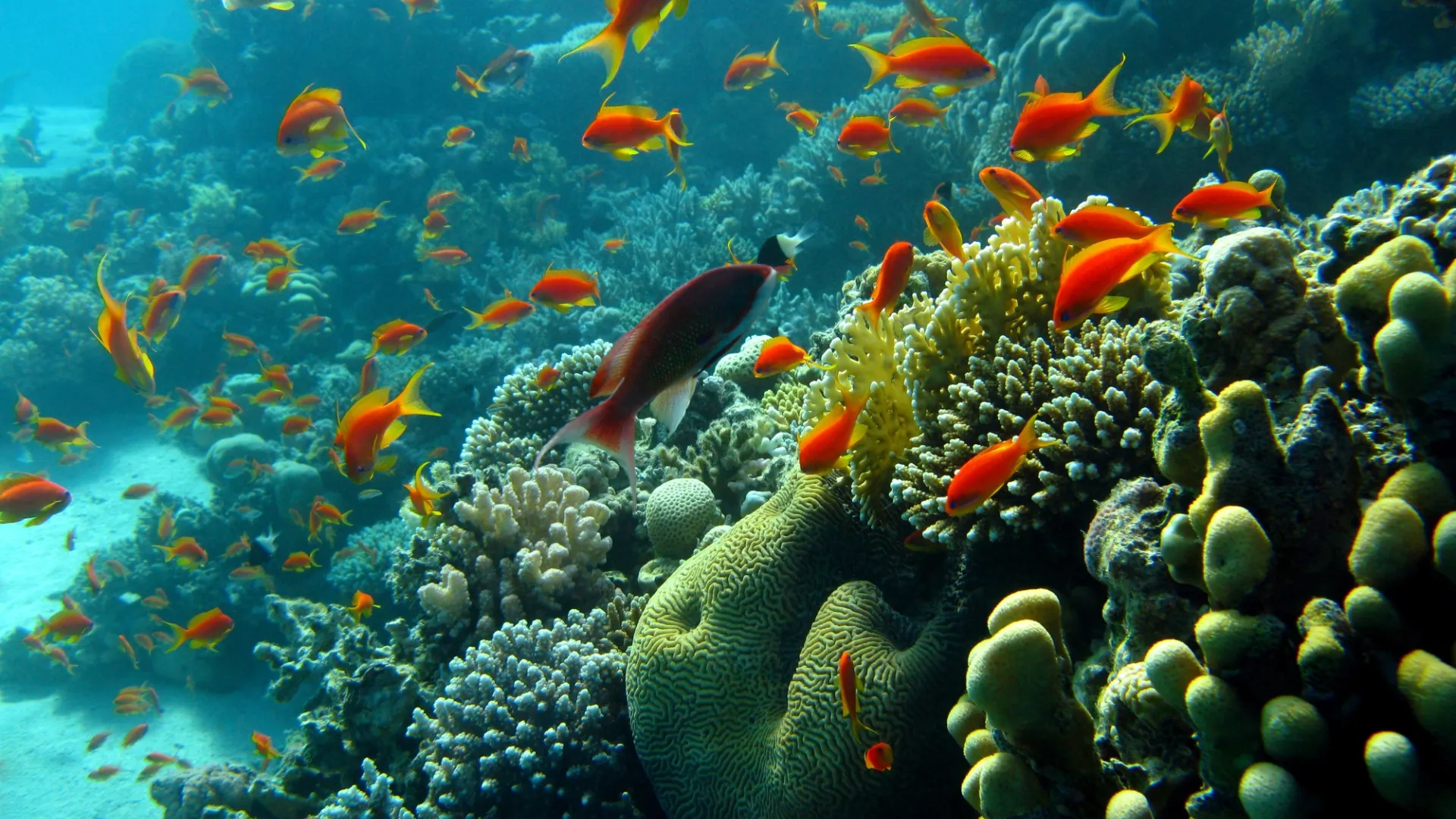
Our oceans are home to a vast number of habitats, which support an incredible diversity of life. Different species are spread throughout the surface waters, the water column, and all the way down to the seabed. Many different human activities are putting pressure on these marine environments, like destructive fishing practices, the release of pollutants, noise, and climate change.
Human pressures interact with habitats and species, leading to impacts that are highly variable and often build on each other. This can cause a widespread decline in the ecosystem health and, in the worst cases, the complete loss of habitats and the extinction of species. These changes alter the entire marine community, affecting its ability to function and making it more sensitive to future impacts.
Why should we care about the health of ocean ecosystems?
So much of what we depend on comes from healthy ocean ecosystems, including the air we breathe, the food we eat, and the recycling of essential nutrients. Because of this, the impacts of human activities on the marine environment have far-reaching consequences for all of us.
How does NOC figure out what's happening to these ecosystems?
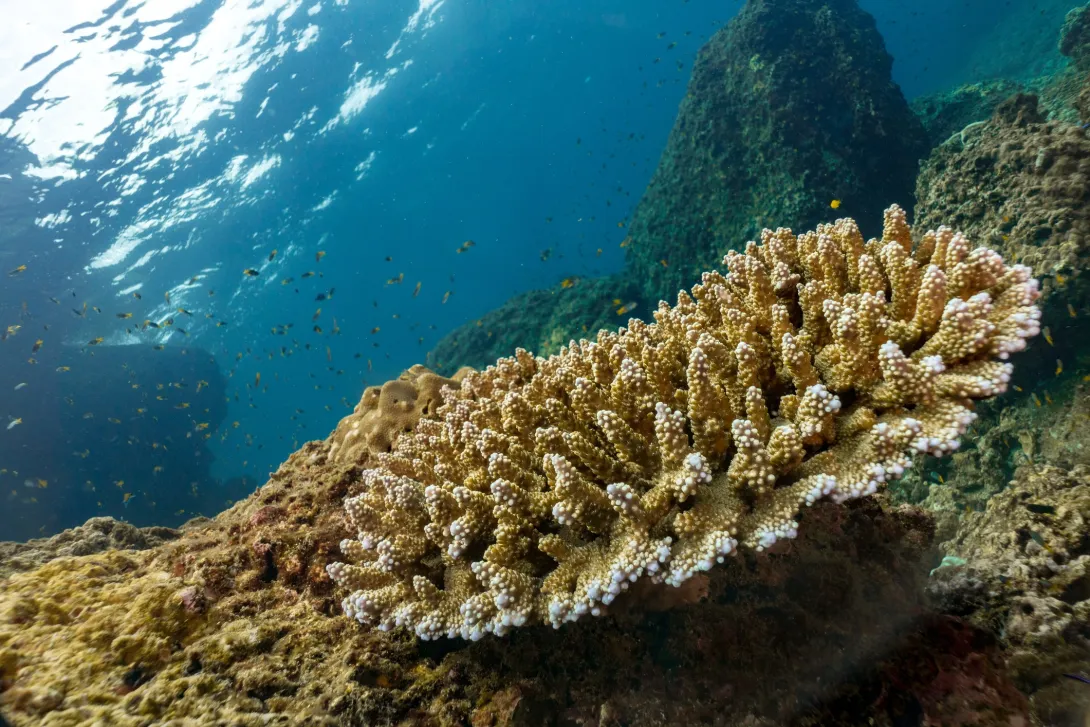
We aim to study the impacts on all aspects of the biological community. This ranges from the smallest microbes, meiofauna, and macrofauna to the full variety of species that connect the surface waters to the deepest parts of the ocean.
The insights from our research are critical for understanding how marine species and habitats respond to human activities. By conducting sustained and repeated observations of affected sites, we can get a much clearer idea of their recovery paths after an impact.
By doing this research, we provide solid evidence that helps support good decision-making within industry, policy, and society as a whole. This work contributes to the sustainable use of the marine environment and helps preserve the ecosystem services that benefit humanity. Without this research, harmful practices could go on unchecked, speeding up biodiversity loss and potentially pushing ecosystems past tipping points from which they can't recover.
Our research aims to better measure the impacts created by various human activities on land, in coastal areas, and in the open ocean. We have active projects looking into different forms of seafloor mining, traditional and new types of pollution, the various effects of climate change, fishing, and coastal development.
How do you actually observe these changes?
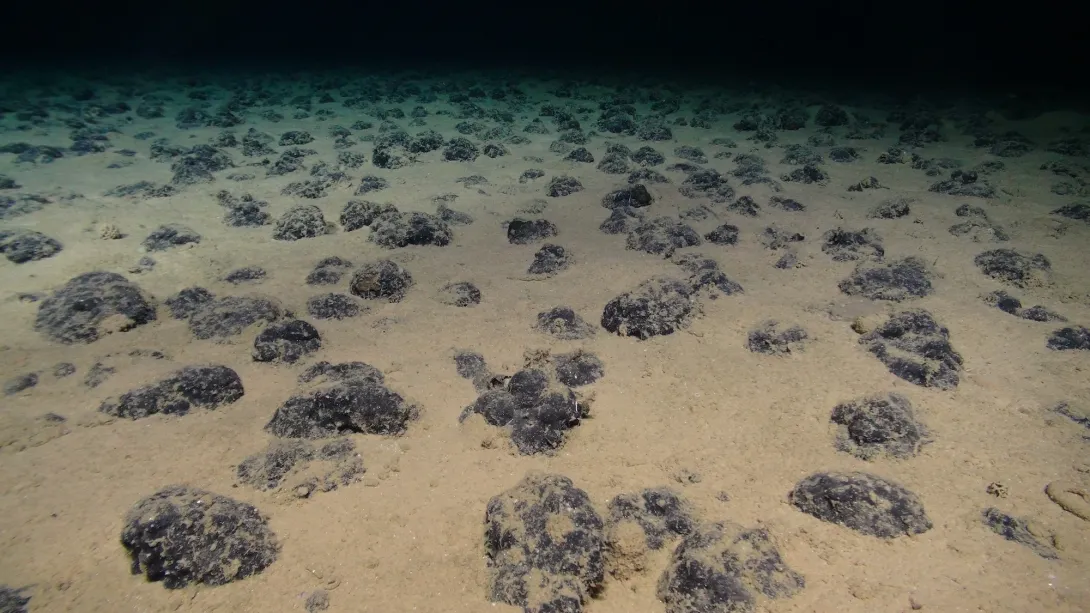
We use a combination of observational methods to characterise the composition and distribution of biological communities on the seabed, and to directly detect how severe the impacts are. These methods often rely on autonomous platforms for the remote collection of photos, sonar maps, and other environmental data in areas that are hard to reach. This same technology allows us to revisit impacted areas to understand how quickly they recover, which for deep-sea communities can be a slow process that takes many decades.
Our projects seek to document impacts by tracking ecological and environmental changes with imaging and sampling, documenting distributional shifts through marine habitat mapping, and monitoring long-term temporal changes using sustained observatories, like the Porcupine Abyssal Plain Sustained Observatory and UK Marine Protected Area sites.
Why is collaboration so important for this work?
Understanding the full implications of human impacts on marine habitats requires working with many partners. This allows us to cover the full breadth of marine life and to work with organizations worldwide to understand the international consequences of species and habitat loss.
What are the key outcomes of this research?
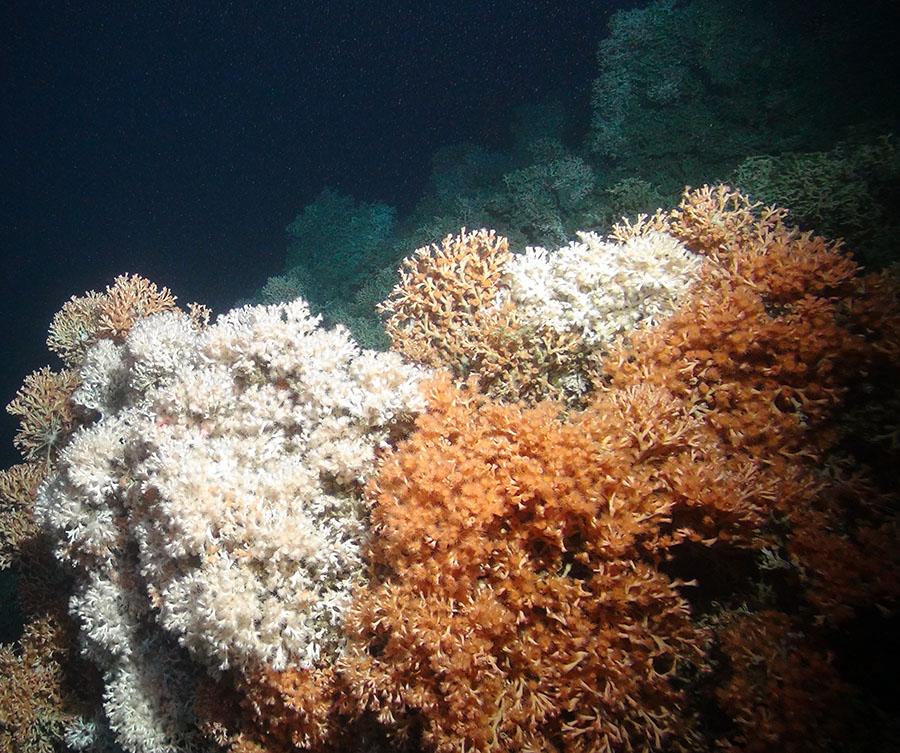
NOC research benefits science and society in several important ways. It helps characterize the fundamental properties of the marine environment, essentially the 'what, where, and how much'. From this baseline, we can establish how human activities change marine habitats.
Our work on deep-sea mining, microplastics, fishing, natural hazards such as underwater landslides, and climate change has led to numerous scientific publications on these timely and important issues.
By working with industry and regulators, NOC has helped drive the development of best practices and effective marine management. By investigating how pollutants behave in different marine environments, we aim to identify patterns, trends, and tipping points. This work is crucial to predicting the ocean's role in Earth's future and informing environmental policies that can reduce ongoing damage.
Sharing our knowledge
Beyond communications between scientists at international meetings and conferences, our work is routinely represented at influential gatherings. These include the UN International Seabed Authority, UN Ocean Conferences, and various science and policy working groups like OSPAR, ICES, and the European Marine Board.
Public engagement is central to our mission of raising awareness about human impacts on the ocean. Our researchers regularly feature in media outlets, including BBC News and The Guardian, to shed light on issues like microplastic pollution, marine geohazards, and deep-sea mining.
Our environmental credentials stretch back 100 years to 1925 and the 'Discovery Investigations'. At that time, a new tax on whale oil funded the first detailed research on the impact of industrial whaling on great whales and the ecosystems of the Southern Ocean. That research was instrumental in the eventual international moratorium on commercial whaling.
Interested in learning more about our research on human impacts on marine habitats and life?
Connect with our research teams to discover how we investigate ecosystem responses to human activities and inform sustainable ocean management.