

Protecting Human and Marine Life From Biological Hazards
Waterborne microbiological hazards, including infectious and toxigenic species, represent one of the foremost challenges for public health protection worldwide. We develop sensitive, specific, and rapid methodologies and sensors to enable early detection, high-resolution mapping, and monitoring of these threats, protecting both human health and marine ecosystems.
Detecting biological threats before they impact human health and ecosystems requires innovative science and cutting-edge technology. Our development of rapid, field-deployable molecular detection systems represents a transformative advance in protecting coastal communities and marine environments. By serving as sentinels that continuously monitor our waters, these technologies bridge the gap between scientific capability and societal need, enabling proactive protection of the ocean resources upon which millions depend.
Why are Waterborne Biological Threats Such a Significant Concern?
Waterborne microbiological hazards pose serious risks to both public health and marine ecosystems, and these threats are increasing in both frequency and severity, making early detection and monitoring essential.
Public Health Impacts
In the last decade, the incidence of water-related disease leading to hospitalisation in the UK rose by 60%.
Outbreaks of waterborne pathogens in less economically developed regions are catastrophic, primarily impacting young children.
Harmful algal blooms contaminate aquatic food with potent biotoxins, representing an increasing public health risk.
Economic Consequences
Harmful algal blooms have annual economic impacts amounting to billions of dollars globally.
Invasive species cost the UK economy an estimated £2 billion annually and are expanding as a major contributor to biodiversity loss.
What Makes Early Detection so Important?
Early detection dramatically improves outcomes for public health protection and ecosystem management.
Traditional monitoring typically occurs after contamination (for example, of shellfish), and sometimes not at all, in which cases threats are only identified through human health impacts. By the time the problem is detected, contamination has already occurred and people may have been exposed.
Early detection enables:
- Proactive response rather than reactive damage control
- Prevention of food supply contamination
- Protection of aquaculture and fishing industries
- Evaluation of bathing water safety
- Early intervention before invasive species establish populations
- Reduced economic and health impacts
Preventing biological invasions, for example, is far more cost-effective than reducing their impacts after establishment.
What Approach do we Take to Detecting Biological Threats?
Our research focuses on developing molecular methods for the detection and enumeration of biohazards, using in situ technologies to detect, quantify, and characterise genetic sequences.
Why genetic detection? All life on Earth contains diagnostic markers indicative of identity and function in its DNA and RNA. Technologies focused on these can be applied across a range of applications, with wide-reaching benefits to coastal communities.
Our vision: To provide deployed systems to serve as sentinels that continuously survey coastal settings.
These new tools offer enhanced speed and predictive power compared to traditional lab-dependent water quality assessment practices, contributing to the successful and sustainable management of aquatic resources for future generations.

How do our Technologies Support Food Safety?
Our genetic sensor technologies are being developed to help aquaculture producers achieve regulatory compliance and quality assurance. They support the sustainable production of food in coastal regions, ensuring compliance with strict legislation detailing its safety and quality.
Real-world application: We've worked with local authorities to trial the use of rapid genetic detection methods to survey shellfish production waters for the presence of harmful dinoflagellate species that lead to the contamination of mussels with highly potent lipophilic biotoxins.
Results: Our rapid methodology warned of the contamination of shellfisheries with biotoxins up to 4 weeks in advance of the traditional, microscopy-based surveillance.
This advance warning provides crucial time for authorities to close harvesting areas, preventing contaminated shellfish from reaching consumers.
What Advances Have we Made in Detecting Harmful Algae?
We've developed sophisticated genetic detection methods for toxic algae species that threaten seafood safety.
Laboratory-on-a-chip systems: We've developed a lab-on-a-chip system integrating DNA purification and loop-mediated isothermal amplification for the quantification of the toxic diatom Pseudo-nitzschia multistriata.
Quantitative detection: Our research has established quantitative polymerase chain reaction (qPCR) methods for estimating toxigenic microalgae abundance in shellfish production waters.
Species-specific assays: We've developed molecular assays for detecting specific harmful species such as Karenia brevis, using advanced lab-on-chip technologies.
These technologies provide the rapid, specific detection needed to protect public health and support sustainable aquaculture.
How Have we Improved Detection of Faecal Contamination?
We've developed new analytical assays for the detection of faecal indicator bacteria, particularly E. coli, which signals the presence of sewage contamination in water.
Advanced assay design: We've scrutinised genomic sequence data to target DNA and RNA sequences that are both highly inclusive of the target species and exclusive of closely related species that could raise false-positive results.
Performance: In early evaluation, these assays out-performed existing methods including those that employ cell culture, for rapidity and selectivity.
Field-ready technology: The new E. coli assays have been carefully developed for use on in situ analytical systems, including:
- Adaptation for chemistries that use low temperature and low-power incubations.
- Utilisation of highly specific optical read-outs
- Stabilisation and preservation for use in the field without the need for cold-chain transport or storage.
These advances enable real-time monitoring of water quality in coastal and recreational waters.
How can Genetic Technologies Help Detect Invasive Species?
A suite of molecular analytics, deployable technologies, and bioassays we've developed has the potential to enable early detection of rare or cryptic invasive species, before populations have established. The following approach can detect invasive species at very low abundances, before they become established and cause ecological and economic damage.
Invasive Species Detection Approach
Invasive species cost the UK economy an estimated £2 billion annually and are expanding as a major contributor to biodiversity loss. Early detection is crucial because preventing biological invasions is more cost-effective than reducing their impacts.
These technologies use high-throughput sequencing, omics, and targeted genetic assays to detect, characterise, and quantify species-specific DNA signatures sloughed into marine environments by their inhabitants.
Collaborative work with the University of Southampton demonstrated eDNA as a tool for non-indigenous species monitoring, with high concordance with rapid assessment biodiversity surveys in the area, including newly introduced species.
What Projects are we Working on in This Area?
We're involved in several major projects developing and deploying biological threat detection technologies. These collaborative projects bring together researchers from multiple institutions to develop the next generation of biological monitoring technologies.
Scientific Publications
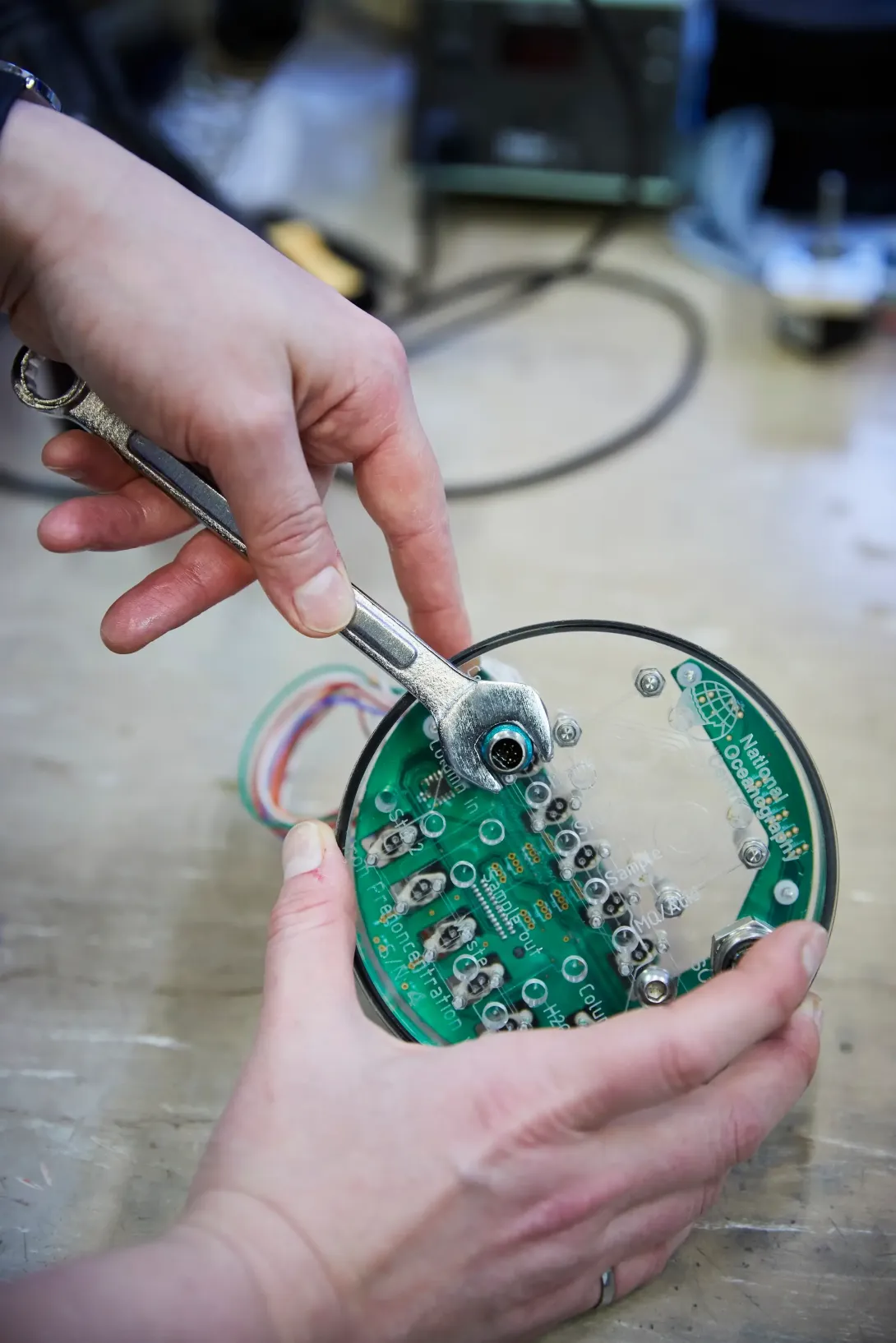
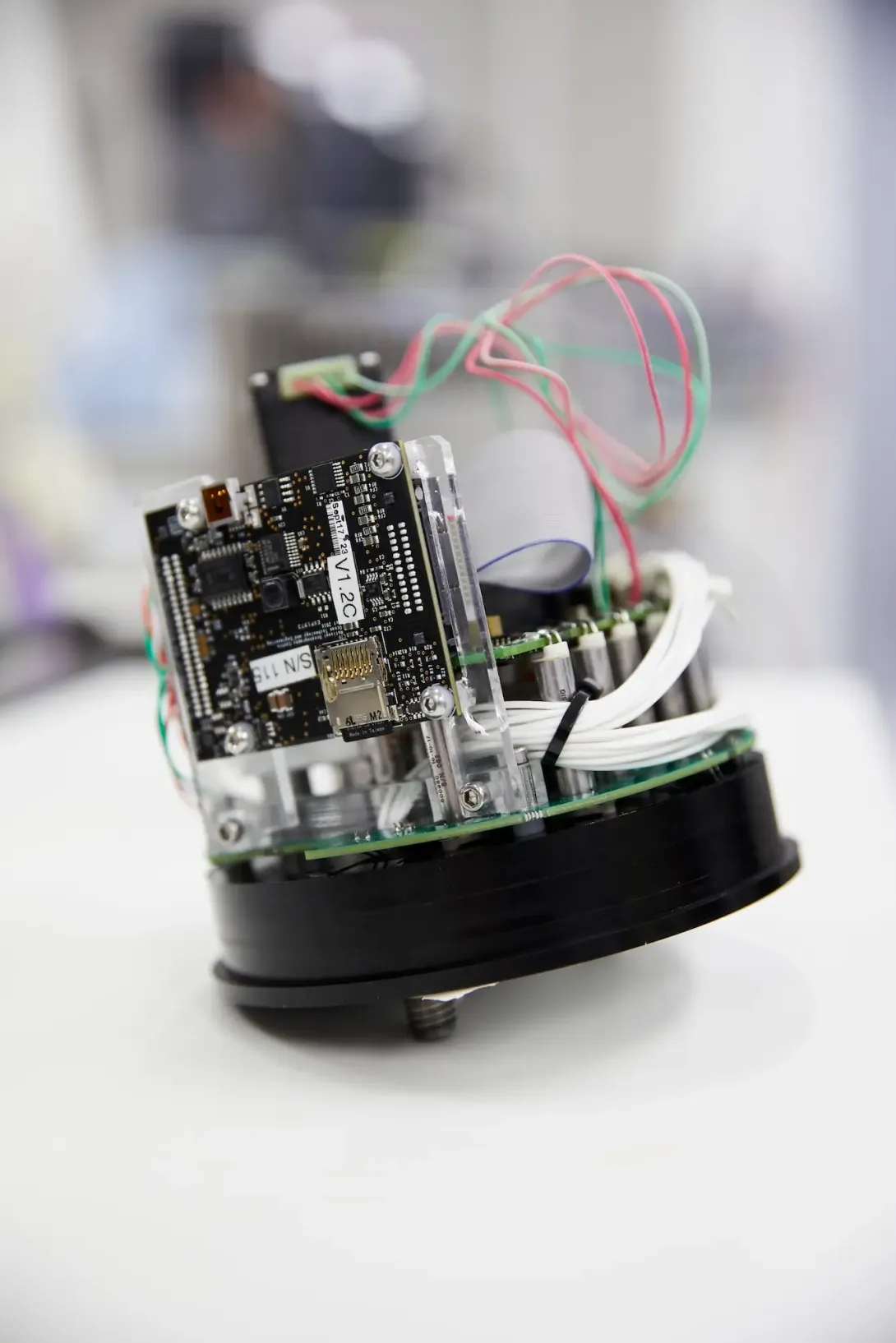
Technology Spotlight: Sensor Development
Oceanography is a science that is highly dependent on observations and measurements. Developing new instruments and sensors is important part of work undertaken at the NOC.